

Product Description
Fits: Reid 2-piece Super 80 case
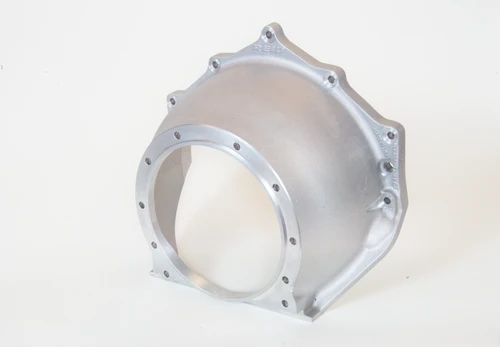
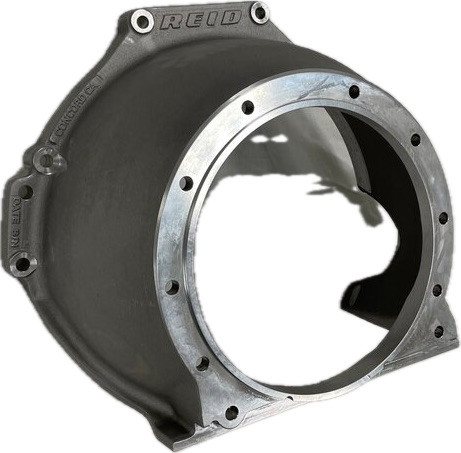
Reid Racing small block Ford bellhousing for the Reid Racing 2-piece Super 80 transmission case. It fits 1966 and later 289-302-351C-351W-5.0L and 5.8L engines, and works well for putting a rugged transmission into a modern muscle car.
Specifications
| Engines | 1966 and later 289-302-351C-351W-5.0L and 5.8L |
|---|---|
| Length | Standard GM |
| Flexplate | 164 tooth |
| Weight | 12.3 pounds |
| Certification | SFI 30.1 |
Construction
It is standard GM length and accepts the standard OEM-size lock-up torque converter for a transmission swap without adapter plates. With proper spacing, a non lock-up converter can be used if desired.
Cast from high-strength aluminum and heat treated for added toughness. The bellhousing passes SFI 30.1 certification and is approved with no external shields required.
The bell weighs 12.3 pounds and has an open bottom for easy converter access, a reduced diameter for better floorboard clearance, and a contoured mounting flange that matches the rear of the engine. Designed for a 164 tooth flexplate, with stock-style starters in the factory location.
Notes
Note: This Bellhousing does not fit the Reid Racing PG2000 or SH400 transmission cases or OEM cases!
Cast from high strength aluminum heat treated for additional toughness, the bellhousing passes the stringent SFI 30.1 certification * and is approved with no external shields required.
There are currently no SFI or Racing Sanctioning Body provisions that require testing for containment of torque converter failures and Reid Racing, Inc.
Reid Racing part number: RR-BH810 Note: This Bellhousing does not fit the Reid Racing PG2000 or SH400 transmission cases or OEM cases!
However, meeting SFI specifications is not a guarantee against failure in use ; it means that the products have undergone SFI specified testing on a regular basis and have demonstrated that they meet or exceed the minimum standards as established by SFI Foundation, Inc.
can make no guarantees, warranties, or representations regarding the end result of torque converter failures.